

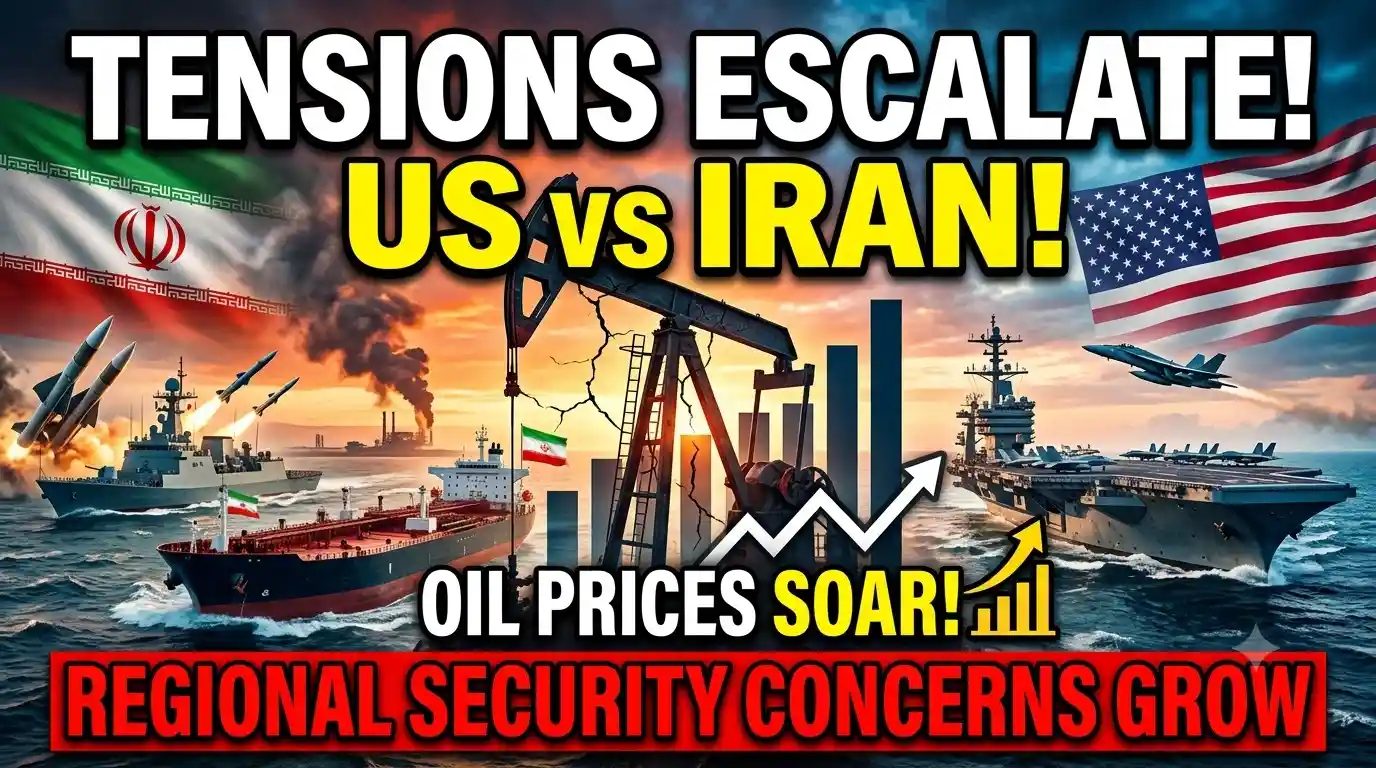
US-Iran Tensions Escalate as Oil Prices Rise and Regional Security Concerns Grow
September 7, 2026 | World News
Tensions between the United States and Iran have intensified again this week, raising concerns about regional security, international shipping and energy markets.
The latest escalation follows renewed U.S. military strikes involving Iranian targets and retaliatory Iranian missile and drone attacks against locations in the Gulf region. Countries including Kuwait, Bahrain and Jordan have reported intercepting Iranian attacks.
The developments come after months of conflict that began with U.S.-Israeli strikes against Iran earlier this year. Diplomatic efforts remain uncertain, while officials on both sides continue to exchange warnings.
Strait of Hormuz Under Pressure
One of the biggest international concerns is the security of the Strait of Hormuz, a vital maritime route for global energy supplies.
Commercial shipping through the waterway remains below normal levels because of heightened security concerns. Any prolonged disruption could have consequences for global oil markets and countries that depend heavily on Middle Eastern energy supplies.
Oil prices have already responded to the renewed uncertainty.
According to Reuters, Brent crude was trading around $95.67 per barrel on September 4, while U.S. West Texas Intermediate stood at approximately $91.56 per barrel. Brent had gained about 7% over the week, while WTI had risen almost 10%.
Diplomatic Options Remain Unclear
Despite the military escalation, Washington has continued to signal that its objectives include putting pressure on Tehran over its military capabilities and nuclear ambitions.
U.S. Vice President JD Vance has said Washington is not currently seeking negotiations unless Iran stops attacks affecting commercial shipping, while Iranian officials have maintained their own demands.
The conflicting positions make a rapid diplomatic breakthrough uncertain.
Impact Beyond the Middle East
The consequences of the conflict could extend far beyond the region.
Higher energy prices can increase transportation and manufacturing costs and potentially contribute to inflation in countries that import large quantities of oil.
Asian economies, European countries and other major energy-importing markets are particularly sensitive to sustained increases in crude prices.
For now, governments and businesses are closely monitoring developments around the Strait of Hormuz and the possibility of further escalation.
What to Watch
- Security of commercial shipping in the Strait of Hormuz
- Further military action by the United States or Iran
- Oil and fuel prices
- Diplomatic efforts to reduce tensions
- Potential effects on global inflation and trade
This story is developing. Information and casualty figures may change as authorities release further updates.
Leave a Reply