
Kathmandu, Nepal | September 7, 2026
Nepal is facing a catastrophic humanitarian crisis after a devastating flood and landslide disaster swept through Himalayan valleys on August 26, destroying communities, roads, bridges and hydropower infrastructure and leaving thousands of people dead or missing.
According to the latest figures released by Nepalese authorities, 1,252 bodies had been recovered and around 4,216 people were still reported missing as of September 3. Nearly 12,000 people had been rescued. The figures remain provisional as search, recovery and identification operations continue.
Search and rescue operations continue
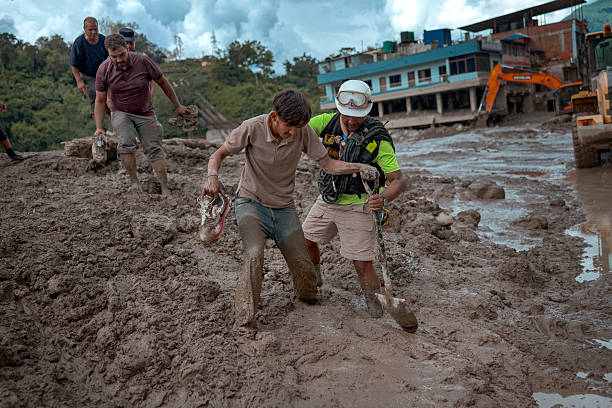
More than a week after the disaster, rescue teams are still searching through enormous quantities of mud, rocks and debris for survivors and missing people.
One of the most challenging operations is taking place around several hydropower projects along the Bhotekoshi and Trishuli river corridors. Authorities believe around 900 people may still be unaccounted for at six hydropower facilities, with some potentially trapped inside tunnels or underground chambers.
Engineers and rescue specialists are using tunnel maps, excavators, pumps, controlled blasting and other equipment to reach areas that became inaccessible after the flood.
A network of more than 500 engineers has also been sharing technical information remotely to help rescuers understand tunnel layouts and determine where missing workers may have been located before the disaster.
Entire communities devastated
The Bhotekoshi and Trishuli river corridors have suffered some of the worst destruction.
Powerful flows of water, mud and rock swept through settlements, destroying houses and infrastructure and dramatically changing parts of the river valleys. Reuters reported that some previously inhabited areas were left covered in mud and debris, with little remaining of buildings and other structures.
The destruction has also severely affected transportation and trade routes connecting Nepal with China.
Thousands of residents have been displaced, while many communities remain dependent on emergency assistance for food, medicine, clean water and shelter.
Thousands remain missing
The number of missing people remains one of the most troubling aspects of the disaster.
Nepalese authorities have reported more than 4,200 people missing, although the figure may change as authorities compare missing-person reports, hospital records and information from families with recovered bodies.
The situation is particularly painful for families who have received no confirmation about relatives who were working at hydropower projects, travelling through the affected region or living in communities along the river.
Foreign nationals are also among those reported missing. Nepal has been coordinating with diplomatic missions and international authorities to verify identities and locate people who may have survived.
What caused the disaster?
The disaster has been linked to a major glacier and ice-and-rock collapse in the Himalayan region near the Nepal-China border.
The resulting surge of water and debris entered the Bhotekoshi river system before moving downstream into the Trishuli valley. Reuters has described the event as a catastrophic flood triggered by a glacier collapse.
However, scientists and authorities are still examining the precise sequence of events and the contribution of different geological and hydrological factors.
The disaster has also renewed concerns about the vulnerability of Himalayan communities to rapidly changing environmental conditions, including glacier instability, landslides and extreme flooding.
Hydropower sector badly hit
Nepal’s hydropower industry has been particularly affected.
Several hydropower facilities and construction sites lie along the river corridors that were hit by the flood. Workers were among those caught in the disaster, while tunnels and access roads were damaged or buried.
The sector is strategically important to Nepal because the country has invested heavily in hydropower to meet domestic electricity demand and develop electricity exports.
The disaster has therefore created not only a humanitarian emergency but also a significant infrastructure and economic challenge.
International rescue assistance
Nepal’s emergency response has received international support as the scale of the disaster has become clearer.
Specialised teams and assistance have been provided by countries including India, China and South Korea, while international expertise is being used for tunnel rescue, engineering assessments and identification of recovered bodies.
Nepal’s own army, police and armed police forces remain heavily involved in search-and-rescue operations.
The difficult terrain, collapsed roads, destroyed bridges and enormous quantities of debris continue to make ground operations extremely challenging.
Survivors face a second crisis
For people who survived the flood, the emergency is far from over.
Thousands have lost homes, possessions and sources of income. Communities are facing shortages of essential medicines, clean water, food and safe shelter.
Associated Press reported that more than 4,500 displaced people were staying in 38 relief centres, while other survivors remained in isolated or damaged communities.
Health officials and humanitarian organisations are also concerned about sanitation and hygiene in temporary shelters. Maintaining access to clean water and preventing disease outbreaks will be critical in the coming weeks.
Children are among those particularly affected, with schools and community infrastructure damaged in some areas.
Reconstruction could take years
The destruction is expected to create a long-term reconstruction challenge for Nepal.
Reuters reported that approximately 20,000 homes were destroyed or rendered uninhabitable, with at least 7,500 reportedly completely destroyed. The damage extends across homes, roads, bridges, hydropower projects, commercial facilities and other infrastructure.
Rebuilding will require enormous financial resources as well as long-term support for displaced families and affected communities.
The disaster also raises difficult questions about how infrastructure is planned and protected in high-risk Himalayan valleys, where settlements, roads and hydropower projects are often concentrated alongside steep rivers.
A tragedy still unfolding
Nepal’s flood disaster is no longer only a search-and-rescue emergency. It is becoming a major humanitarian and reconstruction crisis.
Behind every number is a family waiting for information, a community searching through debris, or a survivor trying to rebuild a life after losing a home or livelihood.
With thousands still missing and rescue teams continuing to search damaged tunnels and river valleys, the final human cost of the disaster remains unknown.
For now, the priority remains clear: find those who may still be alive, identify the dead, support survivors and ensure that affected communities are not left alone to rebuild.
Current situation at a glance
Disaster: Catastrophic flooding and associated landslides/glacial collapse
Date of major disaster: August 26, 2026
Bodies recovered in Nepal: 1,252
People reported missing: Approximately 4,216
People rescued: Nearly 12,000
People potentially unaccounted for around hydropower facilities: Approximately 900
Majorly affected river systems: Bhotekoshi and Trishuli
Response: Nepalese security forces supported by international rescue and technical teams
Status: Search, rescue, identification and relief operations ongoing
Figures are provisional and may change as search and identification operations continue. This article was updated September 4, 2026, using the latest available government figures and reporting.
Leave a Reply