

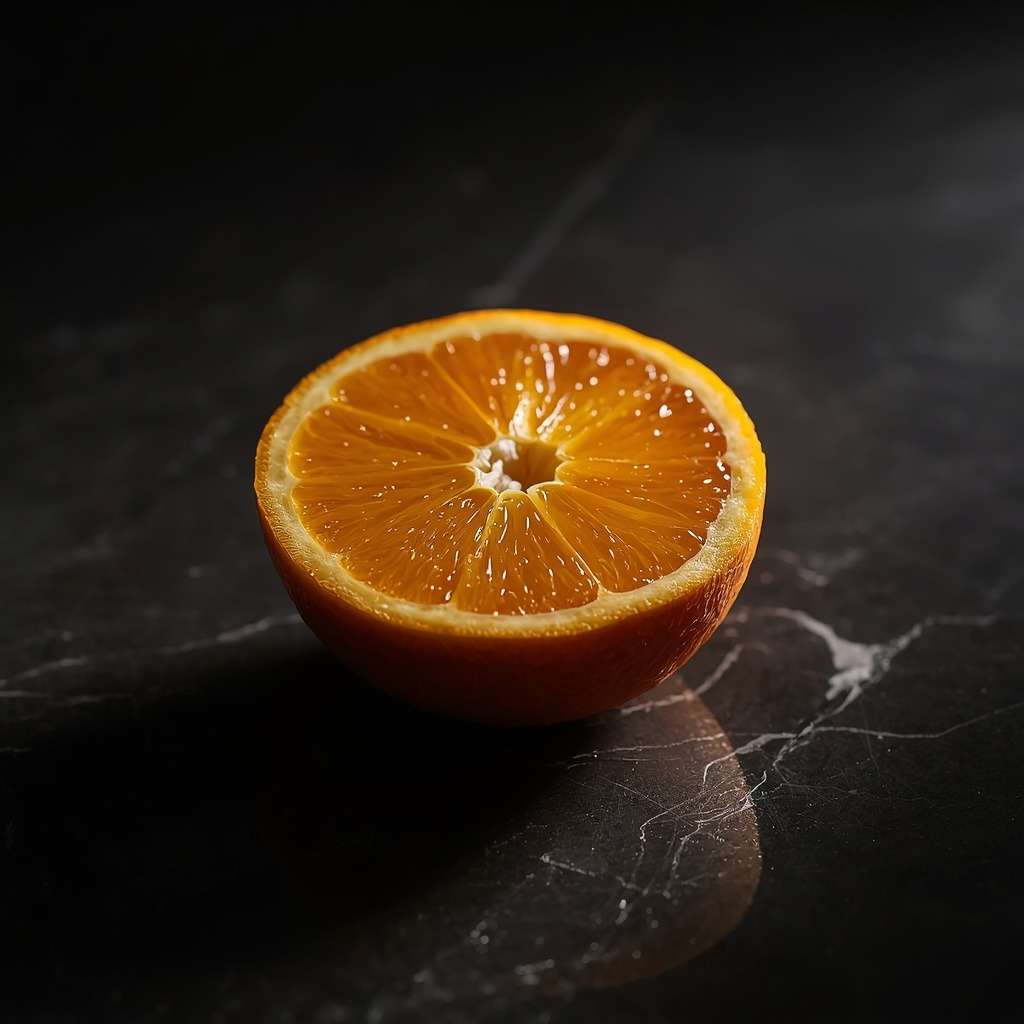
Here’s a strange little fact: for most of human history, English speakers had no word for the color orange. Not because the color didn’t exist — sunsets, autumn leaves, and flames have always been orange — but because nobody had bothered to name it separately from red.
Before Orange, There Was Just “Red-ish Yellow”
Old English had geoluread, which literally translates to “yellow-red.” If something today would be called orange, people back then just mushed two color words together and moved on. The Romans did something similar. There simply wasn’t a cultural or practical need to separate it out — until something new showed up that made the distinction useful.
Entering the Fruit!
That something was the orange itself. The fruit traveled a long road — originating in Southeast Asia, cultivated in China for thousands of years, then carried westward through trade routes into the Middle East, and eventually into Europe via Persian and Arab traders sometime around the 10th and 11th centuries.
As the fruit spread through Europe, so did its name — borrowed from the Sanskrit naranga, which passed through Persian, Arabic, and Old French before landing in English as “orange” by the late 1300s. But here’s the twist: for roughly 200 more years, the word only referred to the fruit. The color orange still didn’t have its own name.
It wasn’t until the 1500s that people started using “orange” to describe the color too — essentially naming a color after a fruit, rather than the more intuitive assumption that it happened the other way around.
The Dutch Royal Connection
There’s a fun follow-on to this. The House of Orange-Nassau — the Dutch royal family — didn’t get their name from the color or the fruit directly. It traces back to the Principality of Orange, a small territory in what’s now southern France, which likely got its name from a Celtic water god called Arausio, long before the fruit ever arrived in Europe.
The overlap is a coincidence of language, not origin — but it’s part of why the color orange became strongly associated with the Netherlands, Dutch royalty, and eventually things like the Dutch national football team’s kit.
Why This Kind of Thing Matters
Color words are one of those areas where language shapes perception in genuinely measurable ways. Some languages still don’t distinguish blue and green as separate categories. Russian famously has two distinct words for what English speakers lump together as “blue” (light blue and dark blue are treated as entirely separate colors) — and studies suggest Russian speakers are measurably faster at distinguishing shades of blue as a result.
So next time you see a pumpkin, a sunset, or a traffic cone, there’s a decent chance you’re looking at a color that only got its name because a fruit showed up in the right place at the right time.
Leave a Reply